How to Store Cooking Oils Properly to Retain Freshness & Nutrients
Cooking oils are a staple item for the kitchen pantry. We use it every day to fry, sauté, temper, and sear ingredients. But did you know that oils can react or change when they are exposed to light, heat, and air? Since we use cooking oil every day, we often neglect how we are storing them. This is one reason they lose flavour or nutritional value, no matter the best and healthiest cooking oil you choose.
As a
FSSAI-certified cooking oil brand, at
Dr Choice, we have a team of industry experts, and we know that these are more common occurrences than you might think. So, in this guide, we will explain the importance of storing oil properly as well as a few easy storage habits to help families get the best out of their bottles. And this is applicable for all types of oil, including
rice bran refined oil,
soybean cooking oil,
refined sunflower oil, and
kachi ghani mustard oil.
Why Proper Storage Matters More Than We Think
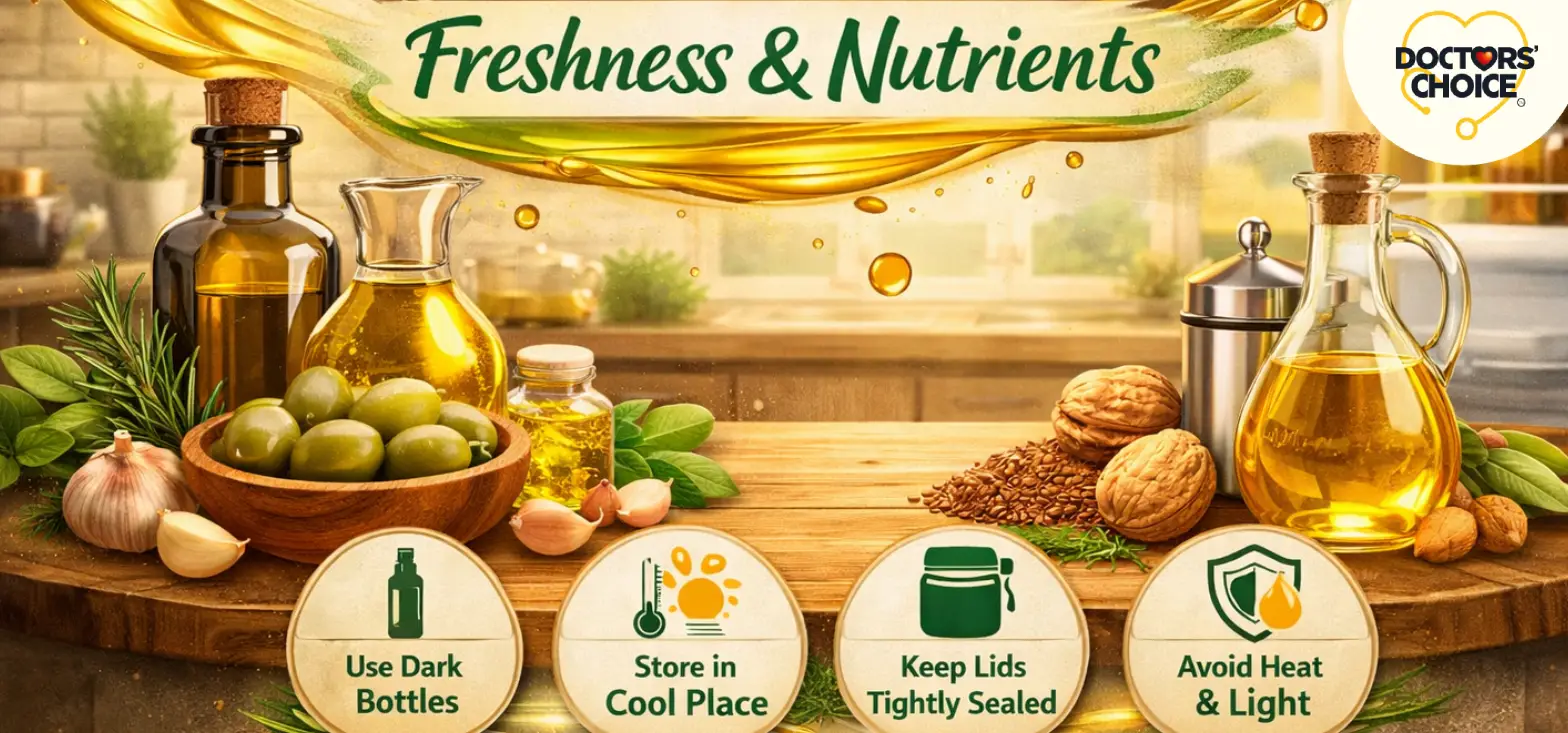
Cooking oils are sensitive to heat, light, and air. When you leave them open, the natural structure slowly begins to break down, which makes them unhealthy for you and your family. This process is called oxidation. It dulls the flavour and strips nutrients over time.
For daily cooking, we want the ingredients to be within reach. So, most Indian homes store oil near the stove. Even though it is convenient, it's one of the fastest ways to age the oil. The heat from the flame, steam, and direct sunlight from nearby windows create a harsh setting.
That is why proper storage becomes so important. It protects the natural stability of rice bran refined oil, keeps the sharp aroma of kachi ghani mustard oil balanced, and saves the gentle flavour of sunflower cooking oil and soybean cooking oil.
General Rules for Storing Cooking Oils Safely
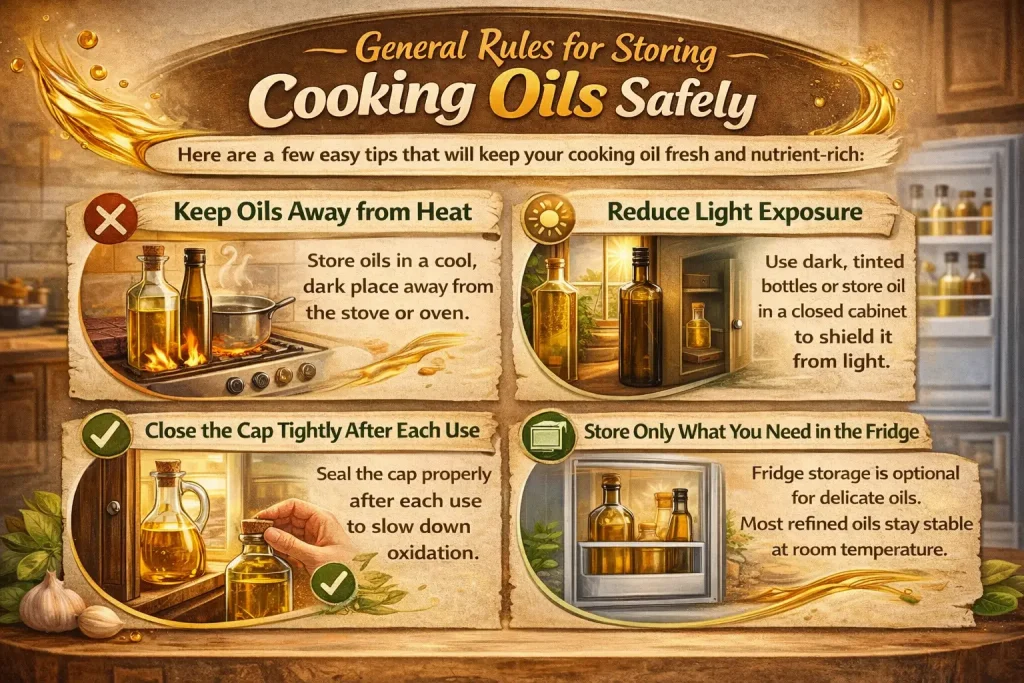
Here are a few easy tips that will keep your cooking oil fresh and nutrient-rich:
Keep Oils Away from Heat
When cooking, don’t place bottles beside the stove or oven. The heat from the stove causes even the best and healthiest cooking oil to go rancid more quickly. This goes for refined oils as well. Even though they can handle high cooking temperatures, you still have to store the bottles in a cool spot. The best choice is to keep them in a closed cabinet after using them. The kitchen also gets warm when you are cooking, so if you have purchased oil in bulk, keep it in a cooler part of the home. You can pour out some in a small bottle and use it for daily cooking.
Reduce Light Exposure
The natural light also impacts oils. While transparent bottles look attractive on shelves, the oil becomes exposed to light. Dark or opaque containers are better for keeping the oil stable. You can pour the bottled oil into a dark container or just keep it as it is and store it inside a cupboard. If you use large tins, place them in a shaded corner.
Close the Cap Tightly After Each Use
Every time you open the lid of your oil bottle, air enters. While small amounts don’t immediately spoil the oil, if you don’t tighten the cap or forget to close it, the oil gets exposed for long hours. So, make sure to close the bottle lid tightly after every use. This slows down the entry of oxygen and helps the oil stay fresh for weeks.
Store Only What You Need in the Fridge
People often ask about whether they need to store oil in the fridge. Well, for some delicate oils, it is better to keep them in a refrigerator, but most refined oils like rice bran refined oil, soybean cooking oil, or sunflower cooking oil don’t need it. These oils stay stable at room temperature when stored well. In case you are refrigerating oil, be sure to use it once it reaches the normal room temperature.
How Pack Size Affects Freshness and Shelf Life
Choosing the right pack size is not only about household needs, but it also affects how long the oil stays fresh. Oil packs come in different sizes, including 500 ml, 1 L, large 4.475 kg tins, or even 15 kg packs. Here’s a small list on what size you should choose and how the size affects freshness.
Small Bottles (500 ml – 1 L)
These work well for small families, bachelors, or people who are not into cooking frequently. The bottle will finish considerably faster, so you don't have to worry about its freshness. Smaller packs also get opened fewer times, which limits air contact. If you are someone who uses different oils for different dishes, this size is ideal.
Medium Bottles (1 L – 2 L)
This is a frequent choice for most Indian families. For a family of 4-5 people, one bottle is enough for about a week, and storage remains easy. Medium bottles offer good value without risking long-term exposure.
Large Packs (4.475 kg, 5 L, 10 L, 15 kg)
Bulk packs come with better pricing per litre. This is what makes them popular for large families, home caterers, or people who cook frequently. But they might go rancid without proper handling. We recommend keeping the main tin sealed and pouring out oil into a smaller daily-use bottle. This avoids opening the tin again and again. Because each time you open the tin, the oil inside meets air and begins to change.
How to Tell if Your Oil has Gone Bad
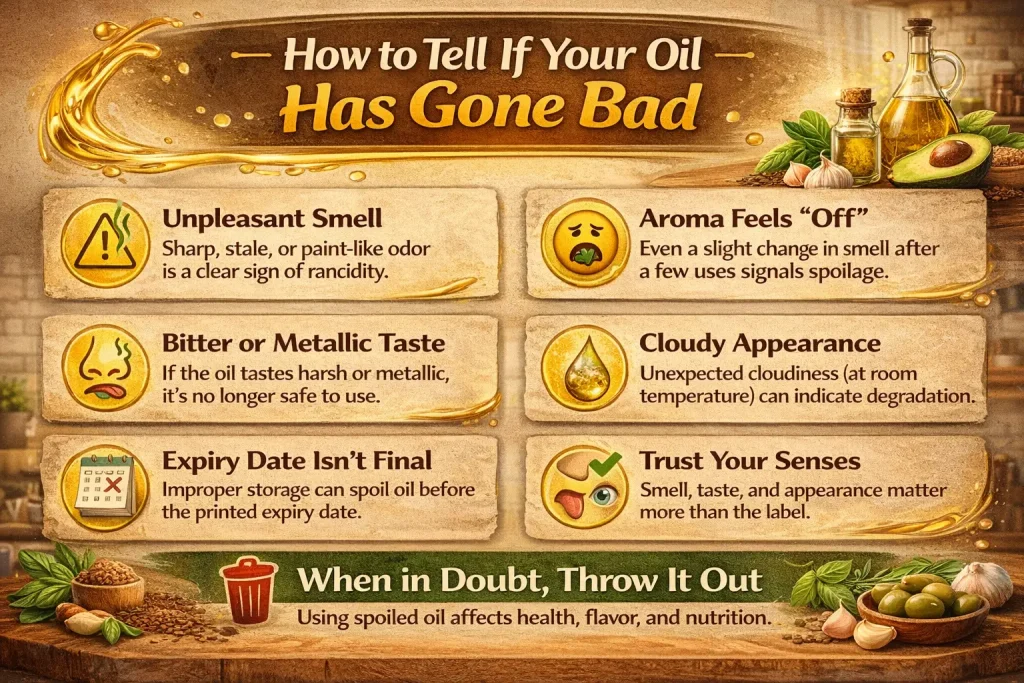
A pro cook can easily tell whether an oil has gone bad.
Rancid oil has a sharp, stale, or paint-like smell. It might also have a bitter or metallic taste. If the aroma seems “off,” after a few uses, then it is safer to discard the oil. Even if the expiry date shows you can still use it, wrong storage and handling can spoil oil faster. So, trust your senses rather than what is printed on the label, in this case.
The Bottom Line
Daily cooking means opening your oil bottle daily. While it is a daily thing, it can still influence how the cooking oil tastes and smells. So, always handle and store oil carefully. Otherwise, even the best and healthiest cooking oil will go rancid, and you will have to discard it.
FAQs
What’s the best way to store cooking oil?
Store cooking oil in a cool, dark place away from heat, sunlight, and moisture. Keep the cap tightly closed after each use. Use dark or opaque containers or place clear bottles inside a cupboard to protect the oil’s freshness.
Can we store cooking oil in a plastic bottle?
Yes, you can keep cooking oil in a plastic bottle. In fact, manufacturers sell them in plastic bottles. But make sure you store them in a cool, shaded place. If the bottle is transparent, store it inside a cupboard so light does not hit the oil directly.
What are the rules for oil storage?
Keep oil away from heat, reduce light exposure, close the cap tightly after each use, and refrigerate only delicate oils. Maintain proper storage, whether you buy 500 ml, 1 L, or large tins, to prevent the oil from turning rancid.
Can we store oil in an aluminium container?
You can store oil in aluminium or metal tins, but place them in a shaded corner and keep them sealed. Because once the oil gets reused or starts breaking down, it becomes slightly acidic and reacts with the container. That is why commercial oil cans made of aluminium usually have a food-grade inner coating. For daily use, pour a small amount into another bottle so the main container doesn’t get opened repeatedly.